Finding Images for Marler...and Beyond!
Identify Admiral constant plate varieties on your stamps
'Finding Images for Marler... and Beyond!' is a searchable image database for Canada’s 1911 KGV Admiral stamp issue.
The pile contains the possibility, but the collector confers the value.
Identify your stamps
Go to the main search page.
If you are new to Admiral CPVs
Learn what Constant Plate Varieties (CPVs) are and see clear examples.
Zones break each stamp into a grid so you can quickly locate varieties.
Learn the system in a few minutes.
If you already know the basics
Go straight to the searchable database of CPVs.
Primary Search – Start identifying your Admiral CPVs.
Search by denomination, CPV type, Zone, format, Marler type and more, then compare your stamp with our images.
If you are doing research
See statistics, new reports, and detailed discussions of Admiral CPVs.
Zone Statistics
See a distribution table of zones by CPV type and denomination.
Latest site news.
Notes sharing the newest discoveries and site additions.
-
It doesn't always work out...I spotted this lovely strip of four of the…
Visit Site News to continue reading.

-

A small curved line in the bottom margin may not seem like much at first…
Visit Site News to continue reading.
-
A Flaw with a Home AddressSome plate flaws are intriguing because they are…
Visit Site News to continue reading.

Search thousands of Admiral CPV images
Browse a growing database of plate varieties for the 1911 KGV Admiral issue, with annotated examples and references to Marler and other sources.
Go to Primary Search
Search's Behaviour
Step‑by‑step help with Zones and CPVs
Use Zones, denomination, CPV type and more to narrow down possibilities, then compare your stamp side‑by‑side with our images.
Zone Help
Tips for more successful searches
Track statistics and new reports
See how often different variety types occur across Zones, follow recent additions, and read discussions of difficult or tentative items.
Admiral CPV Stats
CPV discussion
What you’ll find here
Plated Admiral CPVs ~ 1,000s of identified positions with detailed descriptions and high resolution images.
Documented CPVs ~ Currently there are 5383 searchable items, including 1888 re‑entries, 1824 retouches, and 1671 plate flaws.
Three kinds of material ~ The site includes:
1. Plated varieties with known positions,
2. Clearly constant but as‑yet‑unplated varieties
3. Possible plate flaws, which need a second, proving example.
These are found on the Is It Constant? page.
Powerful search tools ~ Filter by denomination, CPV type, format, Zone, tags and more to quickly find matches to your stamps. The SEARCH PAGE is the heart of the site.
Newly reported varieties ~ There are 187 newly reported CPVs illustrated and 193 likely constant plate flaws.
Research Data ~ The dynamic Statistics of Zone Distribution for each CPV type and denomination can be very enlightening.
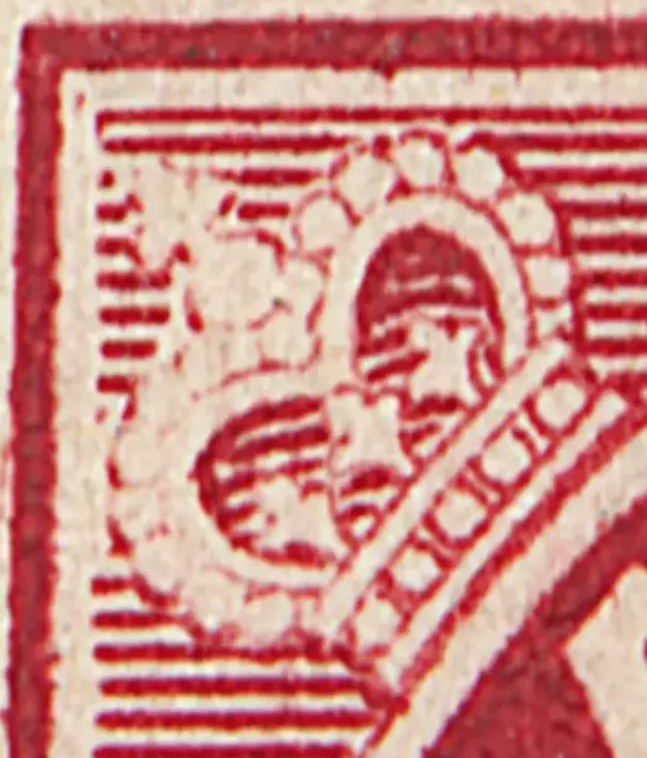
Defective Transfer
Defective transfers show missing or incomplete detail.
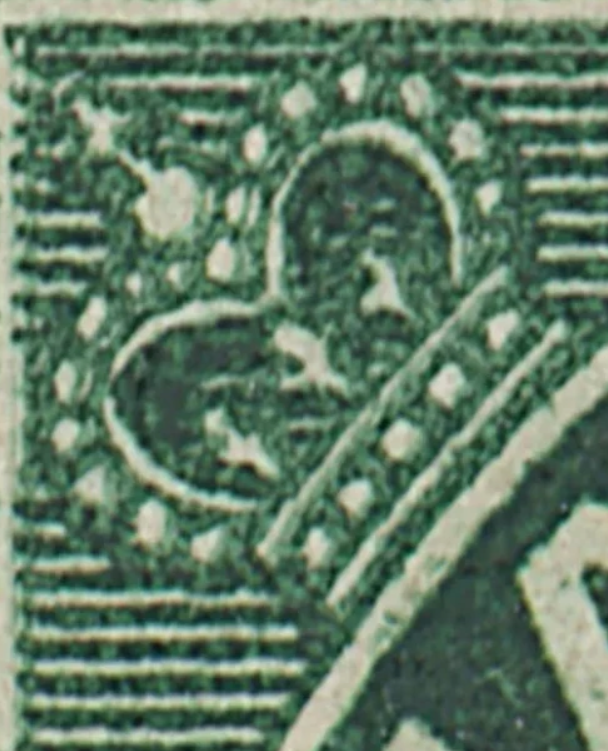
Re‑entry
Re‑entries show extra or doubled lines.
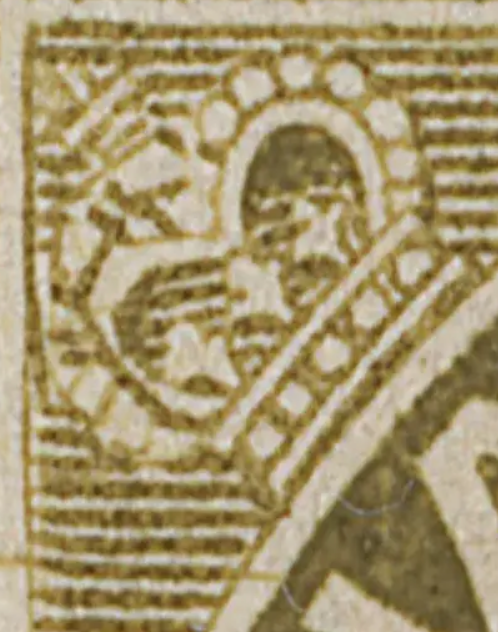
Retouch
Retouches show deliberate strengthening of parts of the design.
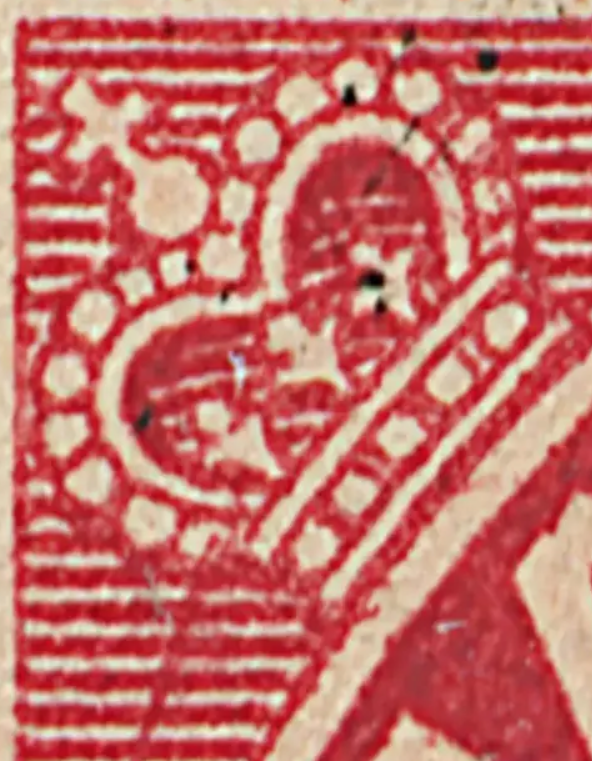
Plate Flaw
Plate flaws are damage which is not part of the original design.
Here’s how these four variety types relate to each other.
The examples on this site are grouped into four main Constant Plate Variety (CPV) types: defective transfers, re‑entries, retouches and plate flaws. Each type tells you something slightly different about the life of the plate.
Defective transfers show problems when the design was first transferred to the plate – missing or incomplete details that were there in the original die. These faults are “built in” from the start.
Re‑entries show extra lines where the design was re‑entered on top of itself. They can range from very subtle doubling to strong extra lines in key parts of the design.
Retouches are deliberate corrections made by the engraver or plate maker. They often strengthen weak areas, redraw missing lines, or tidy up damage, and can be surprisingly easy – or surprisingly hard – to spot.
Plate flaws are accidents of use: damage, wear or other changes that affect certain positions over time. Some are large and dramatic; many are small and require careful comparison with a “normal” stamp.
Looking at examples in all four categories will help you decide which label best describes what you see, and whether a feature is likely to be a constant variety or just random inking or wear.
Before you get started
Our goal is to provide a working tool for plating and studying Admiral Constant Plate Varieties. If you need help plating your Admiral CPVs, you should find this database useful and time‑saving.
Hopefully, you will visit often and share helpful information or images.
Reports of second examples of the stamps shown on the "Is It Constant" page are especially welcome, as they help confirm tentative varieties.
You don’t need to read all of these to use the database, but these references are helpful if you want more detail.
Follow this link for a Quick discussion of the fundamentals of Admiral CPVs.
Canada Admiral Stamp Varieties is part 1 of 6, easy to follow guides, which provide a step by step introduction to the specialized study of Admiral Constant Plate Varieties. Click on the red to get started.
Optional background reading
This site assumes some familiarity with basic philately and the Admiral issue. For general introductions, there are many excellent books and websites; this site focuses on detailed CPV work. The links below may be helpful.
Marler’s book is the primary reference. It is mentioned on almost every page of the site.
Take a close look at the definitions of “re‑entry”, “retouch”, “plate flaw” as examples of Constant Plate Varieties.
These CPVs are the primary focus of the site.
Marler Types Illustrated ( a work 'in progress')

...and the additions continue!
Copyright 2021 W. G. Burden
Visits : 5984
Version 3.0 - March 12, 2026