What Is a Constant Plate Variety?
A constant plate variety, or CPV, is a stamp variety that repeats because the feature exists on the printing plate itself. Instead of being a one-time printing accident or later damage to a single stamp, a CPV will appear again on stamps printed from the same affected position.
On Marler and Beyond, the focus is on constant plate varieties found on Canada’s King George V Admiral issue. The site brings together searchable descriptions, high-resolution images, plated positions, zones, tags, and references to help collectors compare what they see on their own stamps.
A simple definition of a CPV
A constant plate variety is a repeated feature caused by something on the plate used to print the stamp. If the same feature can be found on more than one stamp from the same plate position, it may be constant.
That word, constant, is the important part. Many stamps show odd marks, weak areas, scratches, ink spots, paper faults, or damage. A CPV is different because the cause is connected to the printing plate, not just to one individual stamp.
The four main CPV types used on Marler and Beyond
Marler and Beyond groups Admiral constant plate varieties into four practical categories: defective transfers, re-entries, retouches, and plate flaws.
These labels help collectors decidewhat kind of feature they are seeing before they begin searching the database.
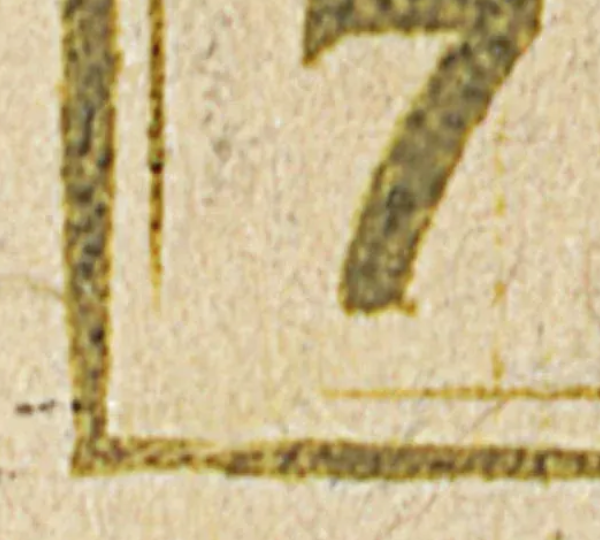
Defective transfer
A defective transfer shows missing, weak, or incomplete design detail. The feature is connected to the way the design was transferred to the plate, rather than to later accidental damage. When examining an Admiral stamp, look for areas where part of the design seems absent, incomplete or weaker than expected. A defective transfer can sometimes help explain why later correction work, such as re-entering or retouching, may have been attempted.
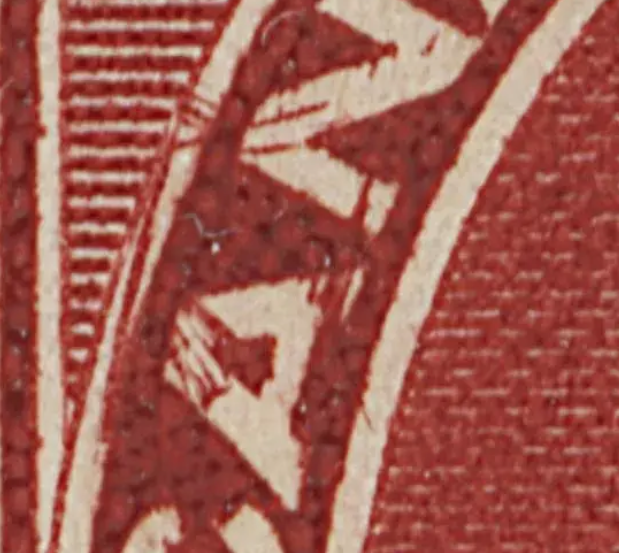
Re-entry
A re-entry shows extra or doubled lines in the design. Collectors often notice this as doubling in letters,frame lines, numerals, the crown, the oval, or other engraved details. On Admiral stamps, the term “re-entry” is widely used in the collecting literature and on this site. Some production details can be more complicated, and terms such as “double transfer” may also be relevant, but “re-entry” remains the familiar search term for many collectors.
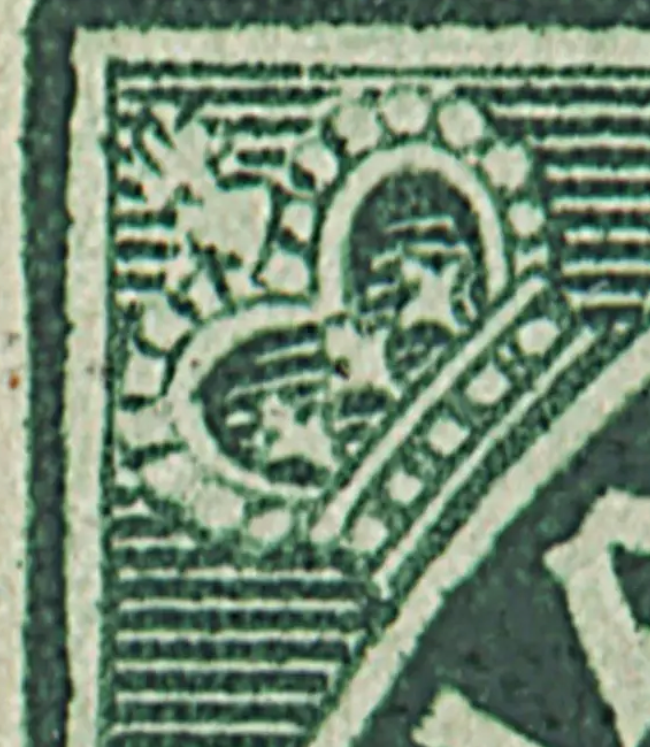
Retouch
A retouch shows deliberate strengthening or correction of part of the design. Retouches may appear as thicker lines, redrawn details, or areas where a weak part of the plate was improved. When searching for retouches, look for lines that seem heavier, less even, or more hand-worked than the surrounding engraved lines. Some retouches are obvious; others require careful comparison with known examples.
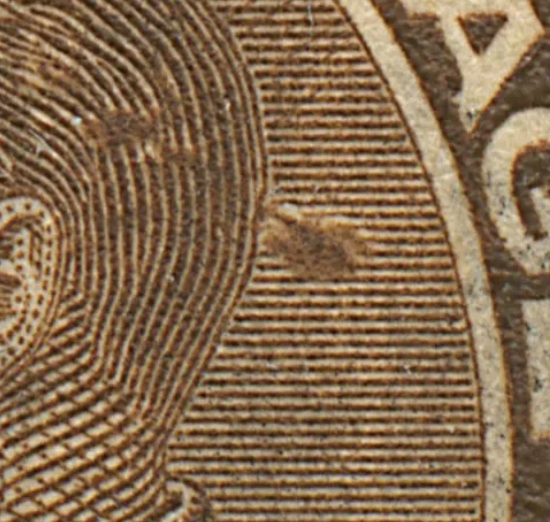
Plate flaw
A plate flaw is usually the result of damage, wear or another accidental change to the printing plate. Unlike a retouch, a plate flaw does not improve the design. Plate flaws can appear as breaks, scratches, dots, marks, or other features that were not intended to be part of the stamp design. A possible plate flaw becomes more convincing when another example confirms that the mark is constant.
Constant variety or random flaw?
Collectors often begin with a simple question: “Is this mark supposed to be there?”
The next question is even more useful: “Does this mark repeat?”
If a feature appears only once, it may be a transient printing mark, paper issue, handling mark or later damage.
If the same feature appears on other examples from the same plate position, it becomes much more interesting to the plate variety collector.
| If you see... | It may be... | What to do next |
|---|---|---|
| The same feature on more than one example | A constant plate variety | Compare with plated or documented examples |
| A one-off mark, stain, scuff, or paper issue | A non-constant flaw or damage | Look for a confirming second example before treating it as constant |
| Extra or doubled design lines | A re-entry or double-transfer type of variety | Search by denomination, CPV type, and zone |
| Strengthened or redrawn design lines | A retouch | Compare the line thickness and surrounding design details |
| Missing, weak, or incomplete design detail | A defective transfer or worn area | Check whether the weakness is known and repeated |
How to begin identifying a possible CPV
You do not need to know every Admiral variety before you begin.
A practical approach is usually enough to narrow the search.
Start with the denomination
Identify the denomination and colour first. For example, you may be looking at a 1¢ green, 2¢ carmine, 5¢ blue, 7¢ bistre, or another Admiral value. This immediately reduces the number of possible matches..
Locate the unusual feature
Look carefully at where the feature appears. Is it in the frame, lettering, numerals, crown, portrait, oval, spandrel, or background lines? The more precisely you can locate the feature, the easier it becomes to search.
Decide what kind of feature it is
Ask whether the feature looks like doubling, strengthening, missing detail, or damage . This will usually point you toward re-entry, retouch, defective transfer or plate flaw.
Use the zone system
Zones divide the stamp into smaller search areas. If you can identify the zone where the feature appears, you can compare fewer records and reach a possible match more quickly.
Compare with documented images
The final step is visual comparison. Compare your stamp with documented examples, paying attention to the position, shape, line thickness, and nearby design details. A good match should agree in more than one visible way.
Common CPV search terms
If you are new to Admiral plate varieties, these search phrases may help you find the right starting point:
Admiral constant plate variety
Admiral CPV
Canada Admiral stamp varieties
Admiral re-entry
Admiral retouch
Admiral plate flaw
Defective transfer stamp
Doubled lines on Admiral stamps
Retouched Admiral stamp
Plated Admiral variety
Related guides....ADD LINKS!!!!!!
Search tools
If your Admiral stamp shows doubled lines, strengthened design details, missing areas, or a mark that appears to repeat, it may be a constant plate variety. Start with the denomination, identify the feature, choose the most likely CPV type and then compare your stamp with the documented images on Marler and Beyond.
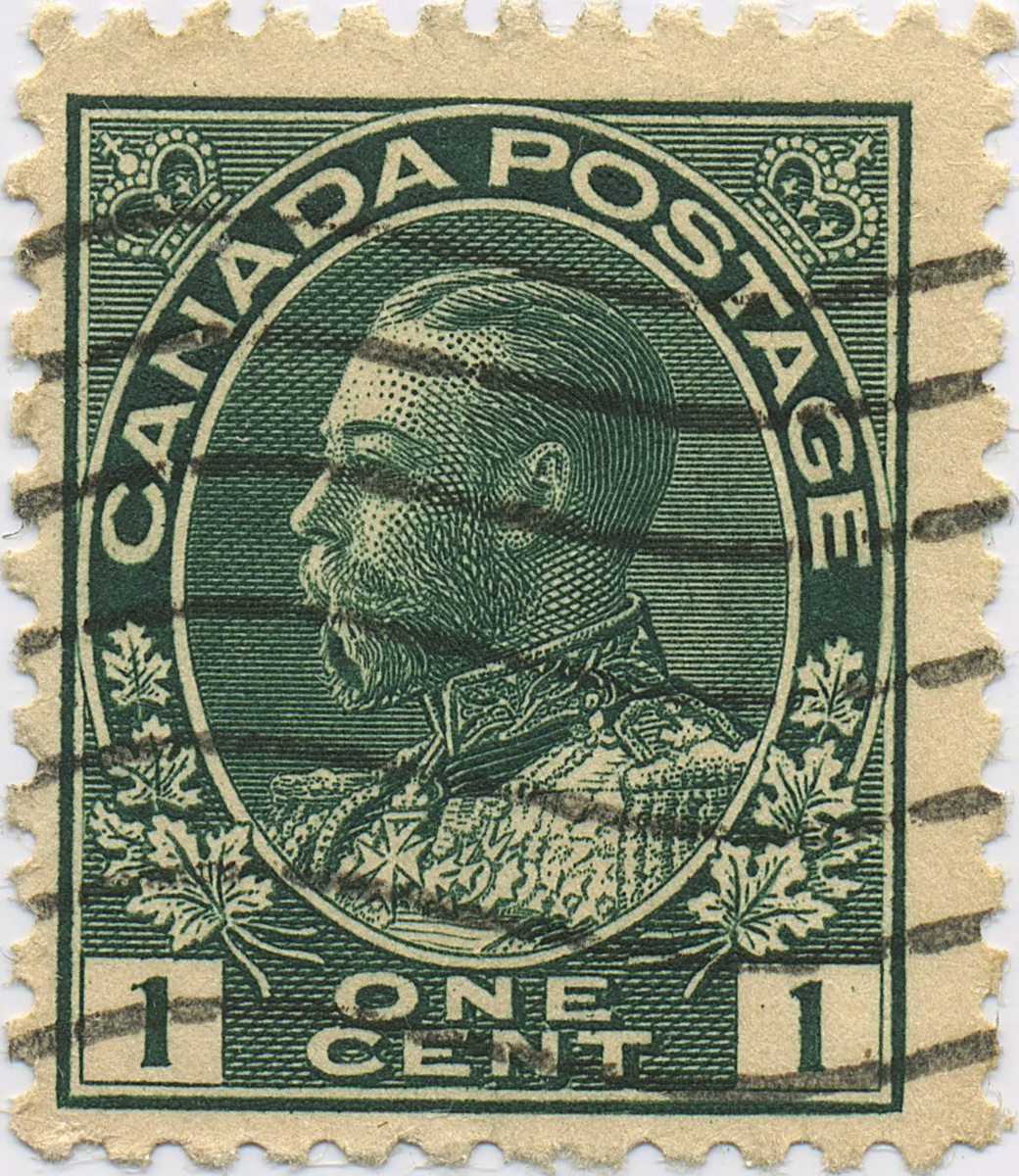
1¢ Green Beard Flaw
Plate Position is unknown.
A newly discovered constant plate variety.
FAQ
-
CPV stands for constant plate variety. It refers to a repeated variety caused by something on the printing plate.
-
No. Many marks are one-time printing effects, paper issues, handling marks or later damage. A CPV should repeat because the cause exists on the plate.
-
A re-entry usually shows extra or doubled lines. A retouch usually shows strengthened, thickened or redrawn lines.
-
A plate flaw is usually accidental damage, wear or an unintended mark on the printing plate. It is different from a retouch because it does not improve the design.
-
Start with the denomination, locate the unusual feature, decide whether it looks like a re-entry, retouch, defective transfer or plate flaw, then use zone and search filters to compare your stamp with documented examples.