Re-entry, Retouch, Plate Flaw or Defective Transfer?
When an Admiral stamp show something unusual, the first question is often simple: what kind of variety is it? The answer is not always obvious. A doubled line may suggest a re-entry. A heavy or uneven line may point to a retouch. A scratch, break, dot or accidental mark may be a plate flaw. Missing or weak detail may indicate a defective transfer. This guide explains the four main CPV types used on Marler and Beyond so you can choose a better starting point for your search.
Quick comparison
| CPV type | What you may see | First search clue |
|---|---|---|
| Re-entry | Extra or doubled lines | Look for doubling in letters, frame lines, numerals, crown, oval or design details |
| Retouch | Strengthened, thickened or redrawn lines | Look for lines that appear heavier, corrected, or less natural than surrounding engraved lines |
| Plate flaw | Damage, scratches, dots, breaks or accidental marks | Look for a mark that was not part of the intended design and does not improve the stamp |
| Defective transfer | Missing, weak or incomplete design detail | Look for parts of the design that appear poorly transferred, absent or incomplete |
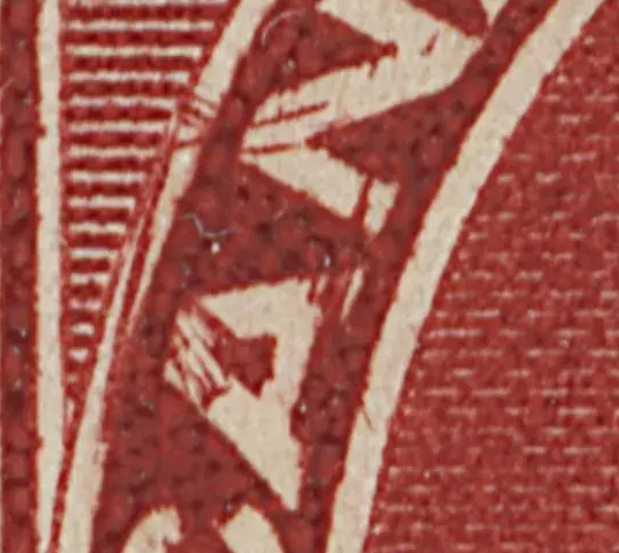
Re-entry
A re-entry shows extra or doubled lines in the stamp design. On Admiral stamps, collectors often notice this as doubling in the frame, lettering, numerals, crown, oval or surrounding engraved lines.
The key visual clue is that something appears to have been entered twice, or at least appears doubled. The doubling may be strong and easy to see or it may be limited to a small area of the design.
What to look for
- Extra lines beside or inside normal design lines
- Doubling in letters such as CANADA or POSTAGE
- Doubling in frame lines, numerals, crown details, oval lines or background lines
- A repeated design element that follows the shape of the original engraving
Search tips
Start with the denomination, then choose re-entry as the likely CPV type. If the doubled feature is in a specific part of the stamp, use the zone system to reduce the number of possible matches.
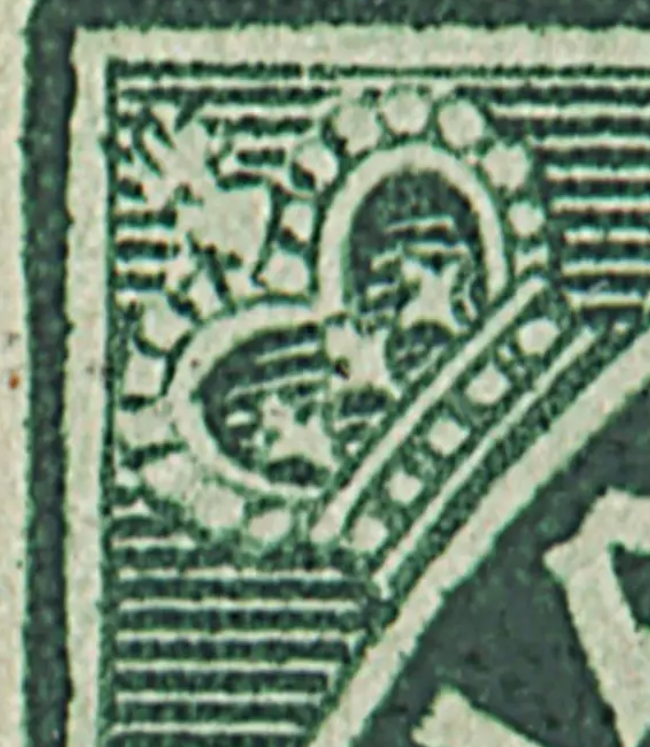
Retouch
A retouch shows deliberate strengthening or correction of part of the design. Retouches may appear as thicker lines, redrawn details, or areas where a weak part of the plate was improved.
When searching for retouches, look for lines that seem heavier, less even, or more hand-worked than the surrounding engraved lines. Some retouches are obvious; others require careful comparison with known examples.
What to look for
- Thickened vertical or horizontal lines
- Redrawn frame lines, numeral box lines, or spandrel lines
- Irregular line weight compared with nearby engraved lines
- Areas where weak design detail appears to have been strengthened
Search tips
If the feature looks like strengthening rather than doubling, begin with retouch. Pay close attention to the exact start and end points of the retouched line, because those details often help separate similar varieties.
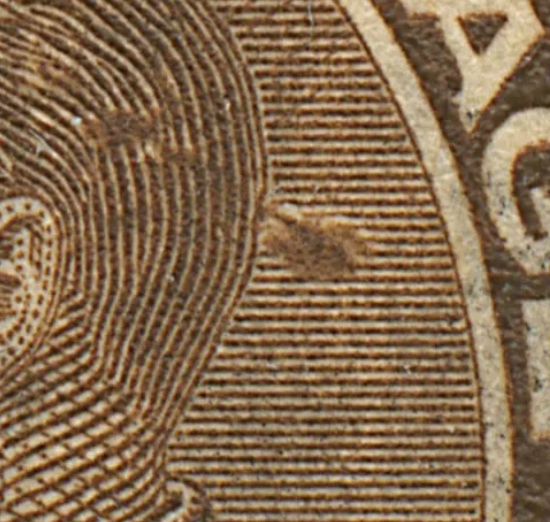
Plate flaw
A plate flaw is usually the result of damage, wear, or another accidental change to the printing plate. A plate flaw does not improve the design. It usually appears as something unintended.
Plate flaws can be very interesting, but they need careful handling. A single mark on one stamp may be damage, a transient printing issue, or a paper problem. A possible plate flaw becomes much more convincing when another example confirms that the feature is constant.
What to look for
- Scratches, breaks,dots, marks or gouges
- Damage-like features that are not part of the intended design
- Marks that interrupt or degrade normal design elements
- Features that appear in the same location on more than one example
Search tips
If the mark looks accidental, begin with plate flaw or possible plate flaw. If you cannot find a match, check whether the item belongs in an “Is It Constant?” category rather than treating it as fully confirmed.
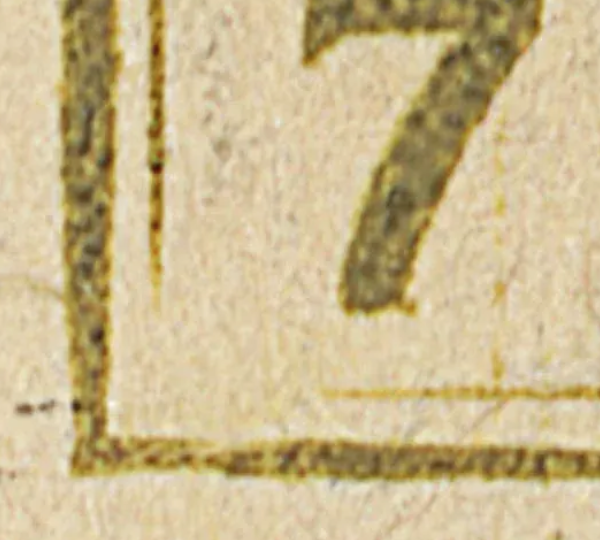
Defective transfer
A defective transfer shows missing, weak, or incomplete design detail caused by the way the design was transferred to the plate It is not the same as later wear or random damage, although the visual effect can sometimes look like weakness or absence.
Defective transfers are useful to understand because they help explain why later correction work may have been needed. A weak transfer could invite retouching, re-entering, or other attempts to improve the printed result.
What to look for
- Missing or incomplete parts of the design
- Weak lines where stronger detail would normally be expected
- Areas that appear poorly transferred rather than scratched or damaged
- Features that may be visible on early plate evidence or repeated examples
Search tips
If the feature is absence rather than addition, start with defective transfer. Compare the weak area with documented examples and nearby normal design details.
How to decide what you are seeing
Step one: Is something extra, heavier, missing, or damaged?
Begin by describing the visual feature in plain language. Do you see extra lines, heavier lines, missing detail or an accidental-looking mark?
Step two: Does it follow the original design?
If the feature follows the normal design and looks like doubling, it may be a re-entry. Of ot follows the design but looks manually strengthened, it may be a retouch.
Step three: Does it interrupt the design?
If the feature interrupts or damages the design, it may be a plate flaw. Look for scratches,breaks, marks or damage-like features.
Step four: Is the design weak or incomplete?
If part of the design seems absent or poorly formed, consider defective transfer. Then compare with known examples before deciding.
Step five: Can it be confirmed?
A variety becomes much more useful when it can be matched to a known record, position or second example. Use the Primary Search, zone system and documented images to compare more than one detail.
Common traps
Do not classify every odd mark as a CPV.
Many stamps have marks from handling, paper, ink, cancellation, soaking, storage or later damage.
A constant plate variety should have evidence that the feature repeats or belongs to a documented plate position.
Do not rely on one visual clue only
A single thick line, dot, or broken line may not be enough. Compare nearby design details, position, shape and surrounding features.
Do not assume re-entry and retouch are always easy to separate
Some varieties are straightforward, but others require experience and comparison. If you are unsure, search both categories or begin with the broader denomination and zone.
Do not ignore the zone
The same denomination may have many possible CPVs. Locating the feature by zone can reduce the search dramatically.
Suggested search paths
If you see doubled lines: Search re-entries by denomination and zone.
If you see strengthened lines: Search retouches by denomination and zone.
If you see a scratch, flaws. dot, break or damage-like mark: Search plate flaws and possible plate flaws.
If you see missing or weak detail: Search defective transfers and related records.
If you are unsure: Start with the denomination, then use zone and tags before choosing a CPV type too narrowly.
Introduction to Canada Admiral Stamp Varieties
Lessons 1 to 6
Search tools
The best CPV identification usually comes from combining several clues: denomination, location, CPV type, zone and image comparison. Once you have a likely category, use the Marler and Beyond search tools to compare your stamp with documented Admiral examples.
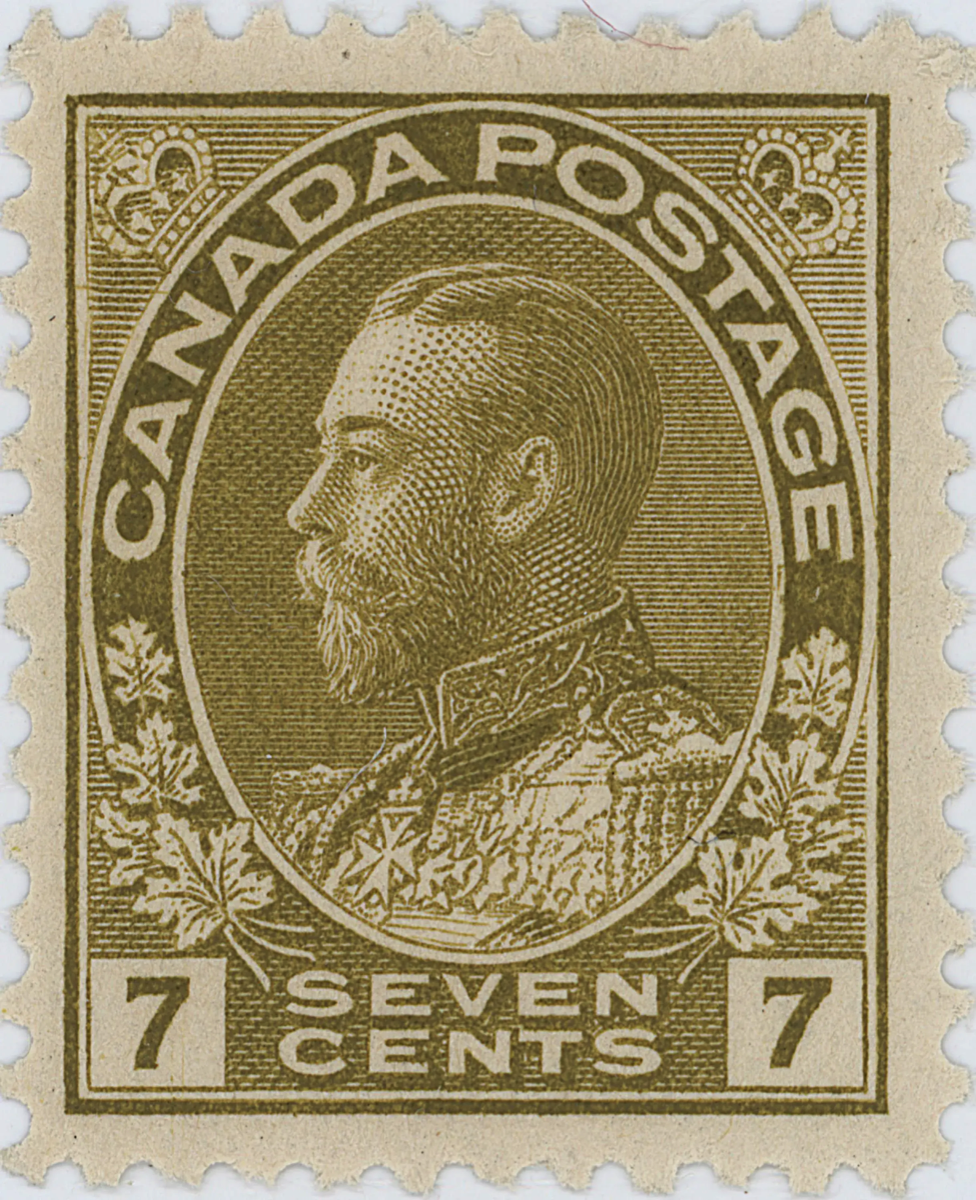
7¢ Bistre 2L76
The left crown is strongly retouched.
Pictured by Marler on page 30.
FAQ
-
A re-entry usually shows extra or doubled design lines. A retouch usually shows strengthened, thickened or redrawn design lines.
-
No. A plate flaw is caused by something on the printing plate and should repeat on stamps printed from the affected position. Damage to one individual stamp is not a plate flaw. It may be more easily understood as a faulty stamp.
-
A defective transfer shows missing, weak or incomplete design detail caused by the transfer of the design to the plate.
-
Yes. Some stamps may show more than one feature and some features may require careful comparison before they can be classified confidently. Marler and Beyond shows many examples, including this 1¢ Green, whicn shows both a re-entry and a retouch.
-
Start broadly. Search by denomination and zone first, then compare possible records across re-entry, retouch, plate flaw and defective transfer categories.